How TapHello started
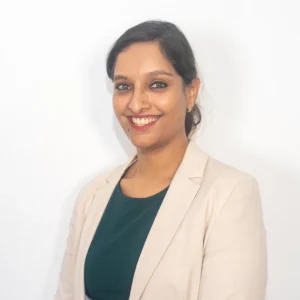
I had to go to an event and did not have cards ready. Every time I went to an event and got a whole stack of cards followed up with a few and some answered and some did not. I am a designer and a natural problem solver, so that’s how TapHello was born.
Every time I meet a connect, that I feel would be a prospective connect for me or someone in my circle, I would ask them to scan the code, fill up the form, automatic message from their phone to mine. Only catch, having a business WhatsApp is handy. Very useful and easy to use, it doesn’t take too long to setup and integrate it.
What a digital connect page actually is
A digital connect page is one mobile screen that lives at your own web address. Somebody scans your QR code or taps your NFC card, and the page opens on their phone.
On it: your logo, what you do in one line, and the reason somebody should trust you. Then an enquiry form with three fields. That is the whole thing.
It is deliberately short. A digital visiting card that asks a person to scroll and hunt has already lost them, because they are standing in a corridor holding a coffee and they have about ten seconds of attention for you.
When a visitor submits the form, a WhatsApp message arrives on your phone already written, carrying their name, their number and what they are asking about. Their phone offers to save your contact in the same step. Nothing is typed by hand at either end.
How it is different from a website
This is the question I get most, so here it is plainly.
A website is where somebody lands when they are already looking for you. They have heard your name, or searched for what you sell, and they arrive ready to read. A website earns its money over months.
A connect page handles a different moment entirely: the ten seconds after a handshake, when the other person is deciding whether it is worth saving your number at all.
Those two jobs need opposite things. A website wants depth, pages, a menu, proof, search visibility. A connect page wants one screen and one action.
Building a website to solve the handshake problem is why so many small businesses spend a great deal and still hear nothing after events. The site was never going to fix that. It was not designed to.
Most businesses eventually want both. Very few need the website first.
How it is different from a link in bio page
Link in bio tools are built for audiences. They assume somebody already follows you and wants a menu of places to go next: a shop, a video, a newsletter.
A connect page is built for customers, and it assumes the opposite. The person has just met you, knows almost nothing, and needs one obvious next step rather than seven choices.
The practical differences: a link in bio page does not take an enquiry, does not save your contact details to their phone, does not send you a message, and usually sits on somebody else’s domain with somebody else’s branding at the bottom.
Do you need WhatsApp Business?
Not strictly, and this is worth understanding before you decide.
The page works with an ordinary WhatsApp number. Messages will arrive and you will be able to reply.
WhatsApp Business simply makes the receiving end better: a proper business profile, quick replies for the questions you answer forty times a month, labels so enquiries do not disappear into a personal chat list, and away messages for when you are on site.
If you are getting enquiries at any volume, it is worth the twenty minutes it takes to set up. It is free.
What a digital visiting card costs in India
TapHello has two plans, ₹3,000 and ₹4,500 a year, both inclusive of GST. There is no monthly fee and no setup charge.
₹3,000 a year. Your connect page designed individually for you, on your own subdomain at yourname.taphello.me. WhatsApp CTA with a pre-filled message, social links, a downloadable contact card, and your own QR code. Hosting included.
₹4,500 a year. Everything above, but your page sits on your own domain at connect.yourdomain.com. Priority support, and a second connect page for a colleague or partner. Domain registration and renewal are billed separately, at actual cost.
Add-ons. An NFC tap card, 3D printed and encoded to your page, is ₹2,000 and works with any plan. Additional team members are ₹500 a year each, with their own page matched to your brand.
For comparison, five hundred decently printed visiting cards cost about the same as a year of the ₹3,000 plan, and they stop being true the moment your number or your designation changes.
How to get one
- Get in touch with me.
- Fill up a basic form.
- I review it and provide you an onboarding form. This helps get all your details and the content you want on the page. You can provide posters or a pitch deck too.
- I take two days and give you your own custom built TapHello connect page.
- You get your link, plus a QR code to help share it easily at an event.
The QR code is generated with the TapHello logo in the centre, so it looks like something rather than a grey square. Print it on your board, your bill book, your invoice, the back of your car. It never needs changing, even when your number, your role or your service list does.
Get your page
Every page in this story started with the same question.
What do you want somebody to do in the ten seconds after they meet you?
Send your answer to 93922 64017 on WhatsApp, in one line, in your own words. No form, no call to book, no pitch deck. What comes back is a live page built for a business like yours, so you can see what that answer looks like once somebody has built it.
Plans are ₹3,000 and ₹4,500 a year, both inclusive of GST. A page goes live in a few days.